


You're sitting on crinkly paper in a cold exam room, and the blood pressure number on the screen may say more about that moment than your overall health. It's the classic "white coat effect," where the anxiety of being in a doctor's office causes your blood pressure to rise. It doubles as a metaphor for one of healthcare's biggest challenges: we often measure people at isolated moments instead of continuously, then wonder why better outcomes remain elusive.
Amir Dolev, VP of Data & AI at Hello Heart, joined the AI for Founders podcast to make the case for something different: a preventive heart health platform built around the days between doctor visits.
Throughout the conversation with AI for Founders host Ryan Estes, Amir returns to a simple idea: people shouldn’t have to carry the full burden of tracking and interpreting their health data on their own. AI should help. And healthcare AI works best when it surfaces meaningful and actionable insights, and helps people stay engaged between clinical visits.
An AI story that predates the AI hype cycle
Amir notes that Hello Heart had predictive AI models running inside the app for roughly three years before the more recent wave of generative AI attention. The original use case was straightforward: flag when a user's blood pressure was trending or spiking outside their baseline, and prompt them to get appropriate care.
Some Hello Heart users have said a notification like that is what sent them to seek care when they otherwise felt fine, and that the visit caught something they wouldn't have otherwise known about. Learn more about one of these instances in Brian's Hello Heart story.
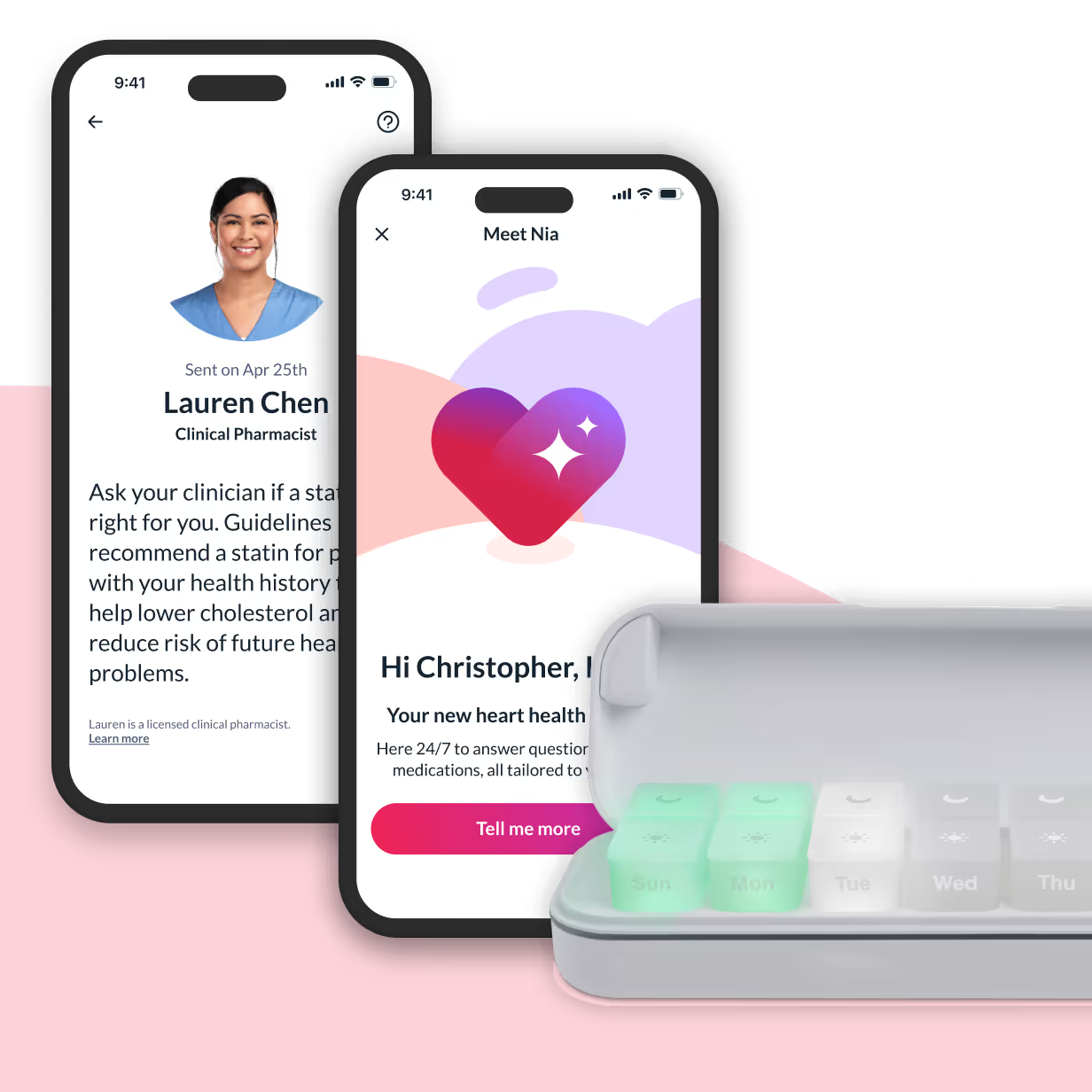
Meet Nia
Nia, launched in October 2025, is Hello Heart's AI heart health chatbot. Nia is designed to help users better understand their heart health 24/7, stay engaged with their care plans, and prepare for more informed conversations with their healthcare providers.
Amir describes Nia as built specifically to help someone understand their behaviors and data, as well as address specific heart health questions and concerns.
Before Nia ever reaches a user, Hello Heart tests it against a proprietary set of hundreds of questions with pre-vetted, clinically credible answers.
Once Nia is live, a separate monitoring system reviews Nia's responses in real time for anything outside its clinically informed guardrails. A team of clinicians is also in place to ensure Nia is providing safe and accurate guidance.
The medication problem hiding behind the blood pressure problem
Roughly half of people prescribed medication for high blood pressure don't take it as directed, a pattern that shows up across chronic disease management broadly.
Amir pointed to two dominant causes: forgetfulness, especially around travel or disruptions to routine, and fear of early side effects that can discourage someone before the medication's benefit is realized.
This is where Hello Heart's AI extends beyond blood pressure readings alone. Nia uses a member's own medication context, alongside their blood pressure patterns, to help them understand their treatment and stay engaged with it.
That context now sits within Hello Meds, Hello Heart's medication management offering, which pairs Nia with the Pill Box and live medication reviews to address adherence from multiple angles: AI-informed guidance, a physical reminder cue, and pharmacist review when needed.
What Hello Heart envisions for healthcare AI
In closing, Amir signals a shift from reactive treatment to what he calls a genuinely preventive care platform, with plans to keep adding both device signals and AI capability over time.
He also pointed to where he sees healthcare AI heading longer term: a member's AI assistant sharing their health data directly with their care team's systems, instead of the member having to repeat and re-explain it at every visit.
If that happens, the time saved shifts toward the conversations that actually need a human: the fears, the tradeoffs, and the simple question underneath most of them:
"How are you doing?”
Watch the full interview with Amir Dolev on AI for Founders here.
Frequently Asked Questions
What does Hello Heart mean by a "preventive care platform"?
Hello Heart is building toward a model of care that shifts from reacting to health events to preventing them before they happen, using both connected devices and AI capability that expand over time. Rather than measuring health at isolated points of care, like a single office visit, the goal is to understand patterns across the hundreds of days in between, so problems surface earlier and care becomes more proactive.
How does Hello Heart make sure its AI stays safe and accurate?
Before Nia responds to any user, it's tested against a set of pre-vetted, clinically credible answers built for Hello Heart's specific population. Once live, a separate monitoring system reviews its responses in real time, and human pharmacists oversee medication-related conversations directly. This structure, not the AI alone, is what benefits leaders and health plans can evaluate when comparing healthcare AI vendors.