


How IAFF Local 22 is helping Philadelphia firefighters understand their blood pressure between calls
At 2 a.m., the bells go off and a firefighter can go from sleep to full exertion in seconds.
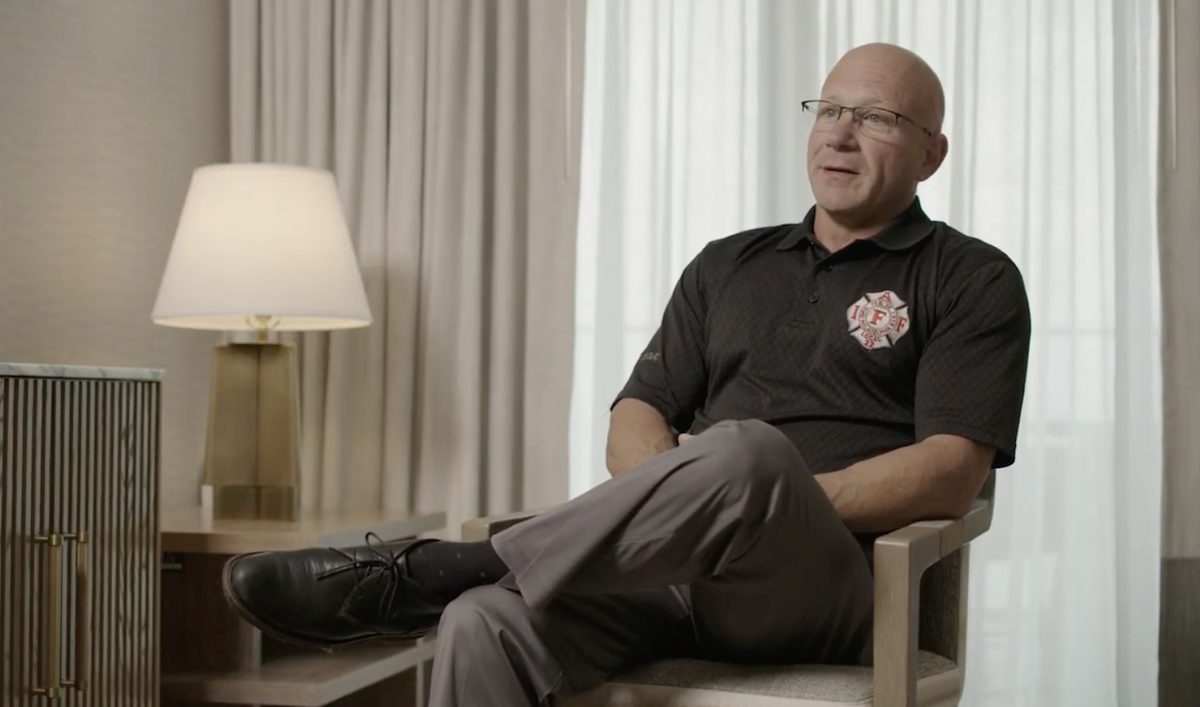
Jack Eltman has done that work for 22 years in Philadelphia. He also represents members of the Philadelphia Fire Fighters and Paramedics Union, IAFF Local 22, and serves as a trustee of its health plan.
Jack describes the physical reaction to a call in simple terms: the lights and bells go off, adrenaline hits, and the body has to respond immediately.
The cardiovascular risk is well documented. The U.S. Fire Administration reported in July that sudden cardiac events remain the leading cause of firefighter line-of-duty deaths, accounting for nearly 45% of fatalities in recent years. Irregular shift work, sleep disruption, operational stress, and intense physical exertion all contribute to that risk.
Firefighters are trained to respond to alarms. High blood pressure, however, often doesn’t come with any alarm at all.
What does a firefighter’s blood pressure look like after a call?
A blood pressure reading at a doctor’s office captures only one moment.
Jack wanted to know what his numbers looked like during the rest of his life, including after a middle-of-the-night call.
With the Hello Heart app and connected blood pressure monitor, he can take a reading when he gets back to the station or at home, follow his readings over time, and share that information with his preventive cardiologist.
Jack remembers coming back from a 2 a.m. run and checking his blood pressure because he wanted to see what had happened.
“I was never able to do that before,” he said.
The Hello Heart Monitor is FDA-cleared and useful for daily heart health tracking. The readings give Jack and his doctor a longer view of his blood pressure than either would get from an occasional office visit.
A fit firefighter can still have high blood pressure
One of the stories Jack heard from a Local 22 member stuck with him.
The member was in excellent physical shape. Jack jokes that the guy could outrun him during training.
Then he started checking his blood pressure and saw readings above 140/90 mmHg, indicating stage two hypertension. He hadn’t expected it.
The member followed up with his physician and later became a vocal supporter of the program inside the union.
You can look strong, work out, pass demanding physical tests, and still have high blood pressure. The only way to know your blood pressure is to measure it.
For firefighters, that information can be especially useful because the physical demands of the job do not happen on a predictable schedule.
More than 800 people started using Hello Heart
IAFF Local 22 represents nearly 3,000 active members. The health plan began offering Hello Heart in 2024 at no cost to eligible participants.
Today, more than 800 of those members have signed up for the program.
“The number alone just blows me away,” Jack says. He never expected adoption to move so quickly, especially among a population with such irregular hours.
Jack also saw how enthusiasm for the Hello Heart program spread. Firefighters talked about their readings and experiences at the firehouse. Someone heard a colleague’s story, signed up, got a monitor, and started checking their own numbers.
For a union health plan, peer-to-peer adoption can do something that benefits communications alone often cannot. Members were hearing about the program from other people they already knew and trusted.
Jack says that 68% of participating members who had blood pressure at or above 140/90 have now subsequently moved below that threshold. These types of reductions can have a significant impact on lowering risk for heart attack and stroke, and ultimately empower members to live healthier lives.
Heart health benefits have to fit the job
Firefighters don’t work around the same schedule as the average worker. Calls come overnight, shifts are long, and the physical demands of the job can change in a matter of seconds.
Local 22 gave its members a way to check their blood pressure when and where they actually live and work, then bring that information into their medical care.
Jack sees it as part of the same responsibility that has defined his career.
“Hello Heart is helping us fight a different kind of fire,” he says. “It’s helping us fight the fire from within.”
Learn more here about how Hello Heart partners with Taft-Hartley Funds.