

Key Takeaways:
- Twenty-seven percent of adults in the United States have a disability.
- Accessibility is often overlooked in the excitement of innovation, but it presents a significant opportunity to positively impact users' lives.
- Implementing accessibility improvements, such as a11y assistive technology tools e.g. screen readers, increased color contrast, font size, etc. not only enhances product quality but also expands the user base and improves health outcomes.
In the landscape of innovation, one thing often falls by the wayside: accessibility. It's easy to get lost in the excitement of building the next big thing and overlook some of the features and functionality that will ensure your product can be used by as many people as possible.
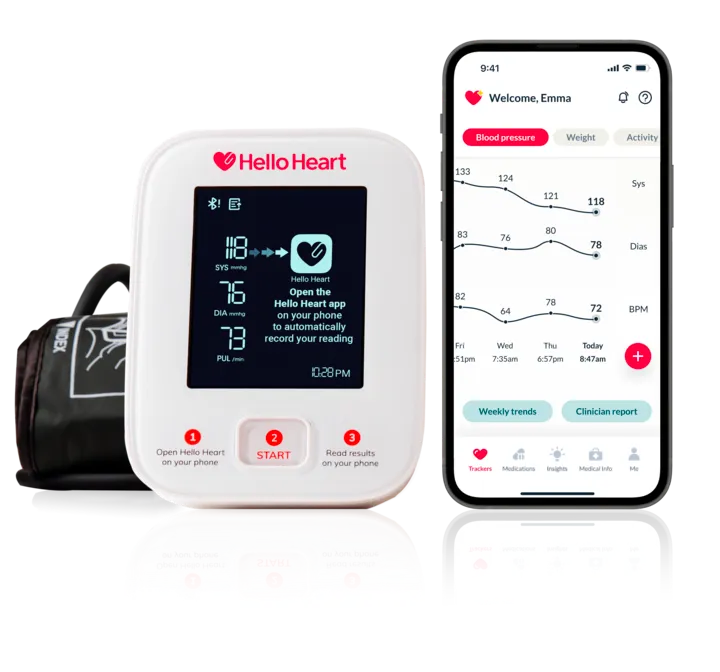
I want to share a few takeaways from our journey designing and developing the latest iteration of the Hello Heart mobile app, where we took a hard look at our product accessibility and how to improve it. As we worked to make our app more inclusive, we discovered accessibility is not just a regulatory responsibility, but a chance to positively impact the lives of our users.
The Opportunity
According to the Centers for Disease Control and Prevention (CDC), 27% of adults in the United States have a disability. That's one in four individuals navigating a world not always designed with them in mind. And nearly half of Americans have some form of cardiovascular disease. These statistics aren't just numbers; they represent real people with unique stories, aspirations, and challenges.
In our work to make the Hello Heart app more accessible, we realized that catering to this diverse group of users wasn't just an obligation, but an untapped opportunity to make a positive impact on our community.
Getting To Know Our Users
To truly understand our audience, we had to not only learn about their disabilities, but also test our products using a variety of available technological tools. We kept asking ourselves: Who are the people who use our app and how can we better serve them? From supporting varying degrees of visual impairments (5%) to mobility challenges (12%), to hearing and cognitive impairments (6% & 13%), we learned to better deliver our product and enable more equitable access for all users. In making our app accessible, we aimed not only to address their needs but also to see Hello Heart as a resource to help them take control of their health.
Ultimately, we made the following accessibility improvements to support our users:
- Implemented the ability to use a11y assistive technology tools e.g. screen readers and Bluetooth keyboard
- Updated design to be consistent with accessibility guidelines, including color contrast, font size, and screen layout
- Provided alternative text for images
- Used simple language
- Doubled down on consistent design across the app
- Performed usability testing with diverse audiences
Our Motivation
Our motivation for making our product accessible went beyond checking boxes for compliance. It’s also not just about reaching a broader market share. Hello Heart’s focus on accessibility is about a pursuit of excellence as we craft a better product, one that can meet the needs of a diverse user base and make a real impact on health outcomes and quality of life.
.png)
Accessibility has become a driving force behind our commitment to innovation in all departments, pushing us to think outside the box and redefine our processes. Building an accessible product isn't just an ethical choice; it's a strategic one. Our journey in making the Hello Heart app fully accessible taught us that the pursuit of inclusivity isn't just about meeting standards — it's about exceeding them. As we champion accessibility, we not only embrace a wider audience, but also elevate the very essence of our product. The lesson learned is clear: In designing for everyone, we elevate our product and expand our impact.