


The hardest part of having a heart condition isn’t always the diagnosis or the procedures. For many, it’s accepting the need for medication—and taking it consistently.
I’m a cardiothoracic surgeon, and when I open someone’s chest to repair a failing heart or bypass a blocked artery, I rarely see the result of something sudden. Instead, I see the physical record of years of slowly building risk that may not have shown obvious symptoms.
That’s why heart disease is called a silent killer. You can feel completely fine while high blood pressure or cholesterol increase your risk of a heart attack or stroke.
And this weighs heavily on me: even when people are prescribed the right medications, nearly half don’t take them as directed.
Some stop because they don’t feel sick or don’t feel the meds working. Others don’t like the side effects or fully understand what the medication is protecting them from. And many struggle to build a consistent care routine.
And the biggest reason is just human nature: we forget.
The Cost of Inconsistent Medication Use
Medication non-adherence is one of the most dangerous and expensive problems in healthcare.
When people skip doses or stop medications altogether, their blood pressure and cholesterol often rise silently over time. Eventually, those unmanaged risk factors lead to heart attacks, strokes, and emergency hospitalizations that might have been preventable.
The financial impact is enormous. Medication non-adherence is estimated to cost the U.S. healthcare system hundreds of billions of dollars every year, largely driven by avoidable hospital visits and complications.
But when people take medications consistently, the difference is measurable.
Better Adherence Decreases Costs and Improves Lives

In a Health Affairs study, people with hypertension who were adherent:
- Spent 2.1 fewer days in the hospital per year
- Had $3,908 lower annual healthcare costs
People with high cholesterol who were adherent:
- Spent 1.5 fewer days in the hospital
- Had $1,258 lower annual costs.
The savings were driven primarily by fewer hospitalizations.
How much more could we save on avoidable healthcare spending if we got every person with high blood pressure or high cholesterol to be more adherent? Employers and health plans are eager to find out.
In our 2026 Heart Health Matters survey of 400 healthcare decision-makers, we found:
- 95% agree digital tools for medication management are valuable levers for reducing the cost of chronic conditions
- 93% said their members would be comfortable using AI-powered tools to support their health via digital coaching and medication reminders
Organizations and members alike are ready for better medication management. They just haven’t yet found a solution that works.
The Gap Hello Meds Is Built to Close
There are two common problems in medication management.
First, many people are not on the right medication or dose for their condition. Second, even when they are prescribed appropriately, people do not take medications consistently.
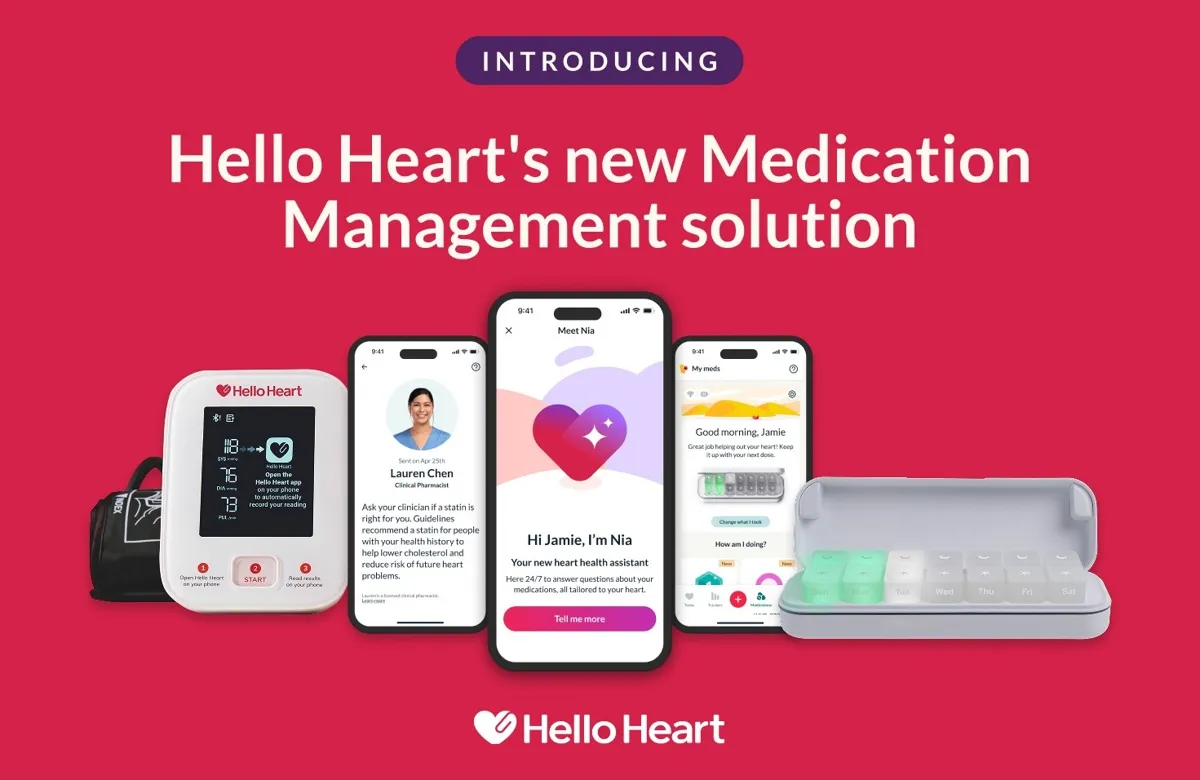
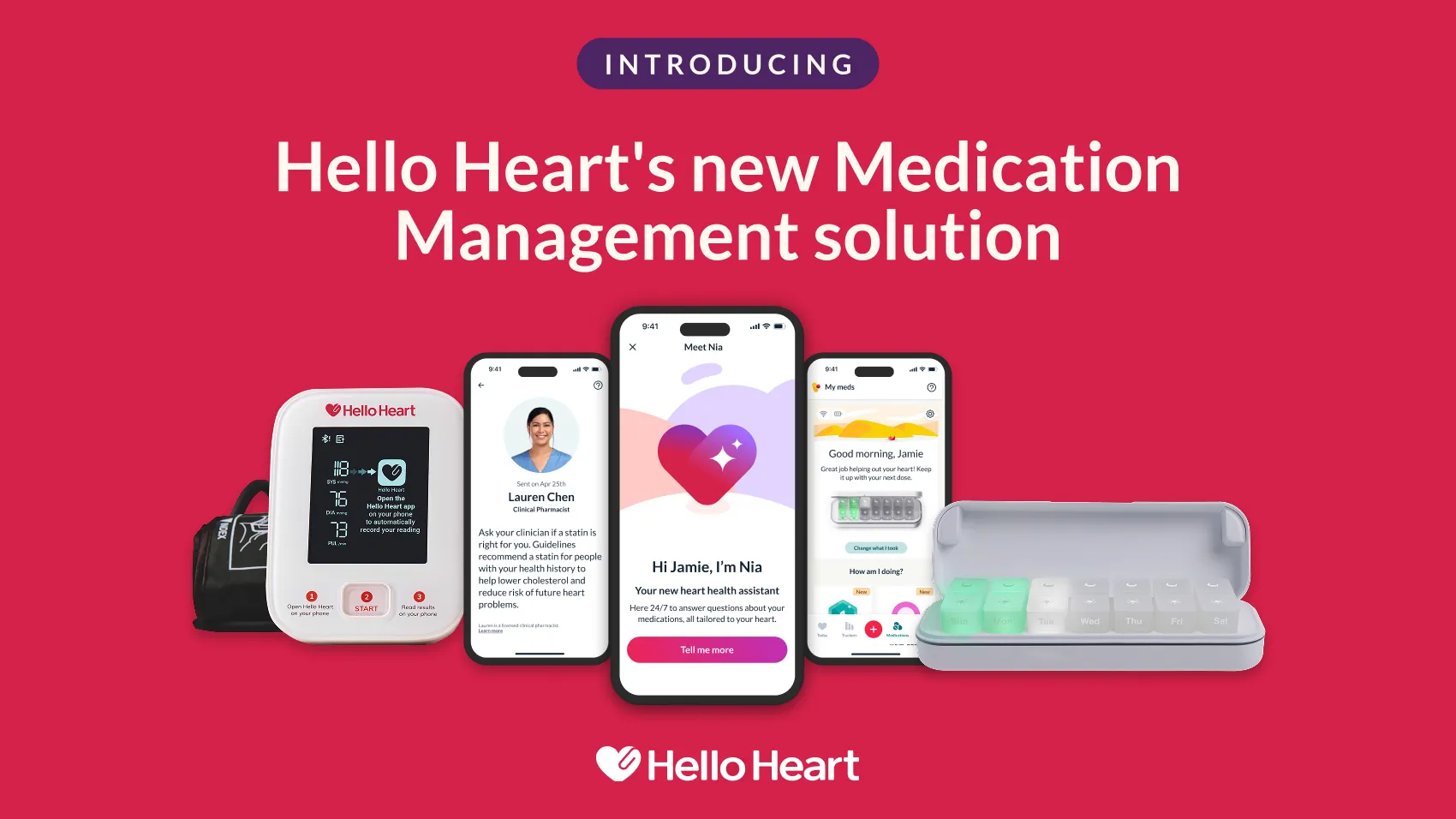
Hello Meds addresses both of these challenges via three integrated components:
Connected Pill Box
Smart reminders, light cues, and automatic in-app tracking help members take medications at the right time, surface adherence gaps early, and keep track of trends over time.
Nia, the 24/7 AI Heart Health Assistant
Nia can answer personalized questions about medications, side effects, and interactions so members can feel confident in their routine.
Pharmacist-led Medication Reviews
Licensed pharmacists review members’ medication lists, identify gaps or dose concerns, and guide members back to their physicians when follow-up is needed.
Together, these tools make it easier for users to stay on track with their medications. .
Why Today’s the Day to Take Action
Hospitalizations related to uncontrolled blood pressure and cholesterol are expensive and often preventable. When medications are taken consistently and monitored appropriately, it’s much easier to get these risk factors under control before they lead to a catastrophic event.
In short, medication adherence is the simplest way to solve a very costly problem in healthcare. But only if you act now.
Schedule a Hello Meds demo to see how better medication management can support your members and help reduce avoidable healthcare costs.
For employers → Get your demo
For health plans → Get your demo